05 Disorentation - Rohit Gupta
Disorientation
Reflections on work done by my study group at Museo Nacional de Reina Sofia
Autor:: Rohit Gupta
It was a crazy night. I had spent the night in the emergency room after having chopped my finger while building a prototype. The next day, I was to meet my long time friend and mentor, Pablo. He was about to tell me about something cool and I could not miss that.
He was talking about the work we will end up doing for Reina Sofia as a study group. One cannot lose any opportunity to ‘not’ work with Pablo and his group of friends. So, I signed up.
The idea was to research on various sociological, artistic, philosophical, psychological happenings of our current post-modern society and build a narrative around it so we can all appreciate these ‘disorientating effects’, present them, and maybe create fun tools to help us orient ourselves.
What follows now, is a series of reflections I wrote a while back and I am piecing them together.
Bottoms up design research methodology
We started with what Pablo calls, UMP (Unidad Mínima de Pensamiento). It is like a nugget or croqueta of knowledge that the group will gather over time. It should be ‘produccion propia’, ie. it should be made by someone and not cut copy paste. Pablo and I worked with others on how we can curate it. This phase lasted for 1-2 months. We slowly found out it is not working because :
- It is a lot of work for people. Most people are full time employed and creating something takes a lot of effort.
- There was a lack of structure, it is nice on paper, freedom and all, But it gets really hard to make people think.
- The progress was slow as people ran out of things to put.
So, after a month we decided we needed a more elaborate structure. A structure that is permissive, yet defined to promote work and thinking.
We wrote a Funeral Notice for our previous approach and created a manual for the next phase.
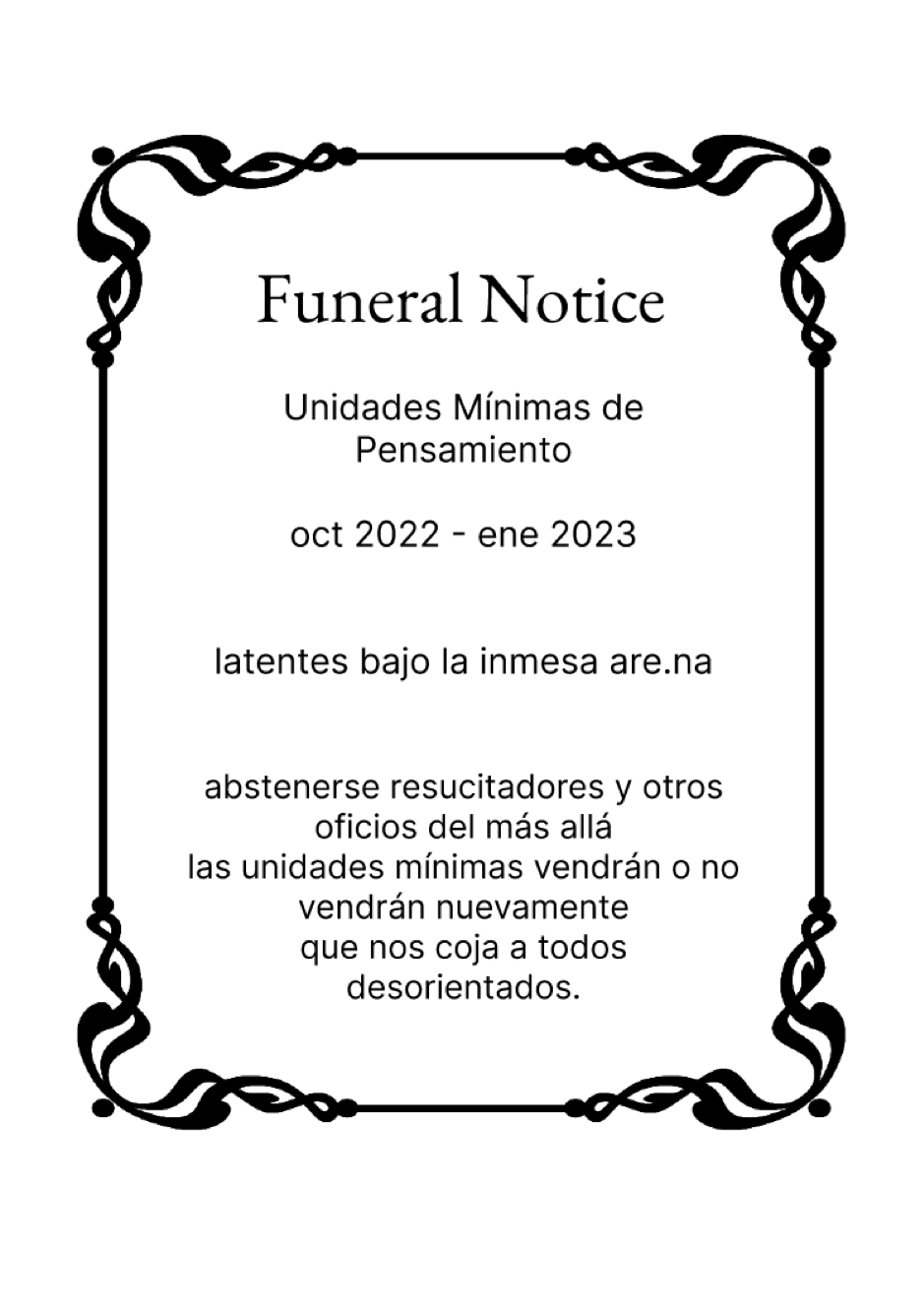
Philosophy of Orientation
The new structure was based on the group’s understanding of how humans orient themselves in the world. We asked them to send us 20-30 questions that come to their mind about orientation. Then Pablo did a great affinity analysis of how the questions fit into an order of things. This is a classic design technique. The questions helped us come up with this new way of thinking about orientation.
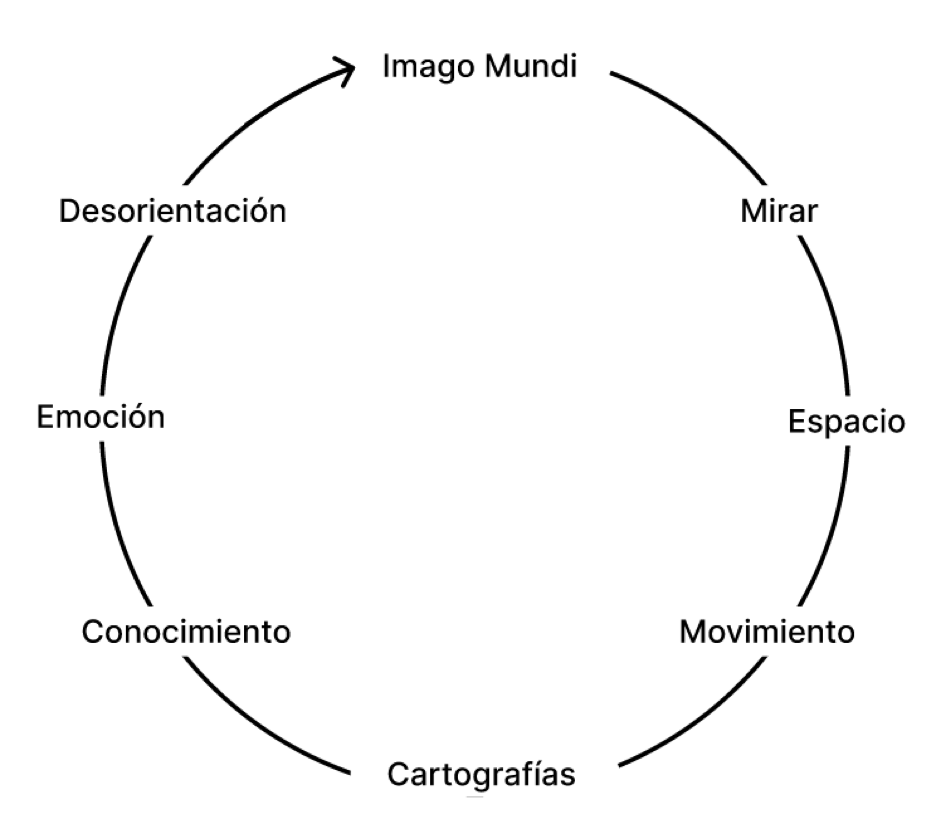
It has the following steps, which are cyclic in their nature. First, we look at the world (mirar), then we look at the space around us (espacio), triggered by the space we move around to find what is going on (movimiento), when we move, we make maps so we can come back (cartografias), these maps generate knowledge, this knowledge interacts with who we think we are and creates emotions, these emotions make us disoriented and to adapt to this disorientation, we create a new world view (imago mundi).
We worked on building this understanding and created a manual of thinking that can help all the groups stay aligned. Unlike the last time, where we used to tool called - Arena, this time we used Miro. The goal of the group was to create things and find examples from their intellectual life about these topics. You can see the manual we made can be seen here .
The Miro grew over several months and we were joined by other who helped contribute their ideas to the digital board.
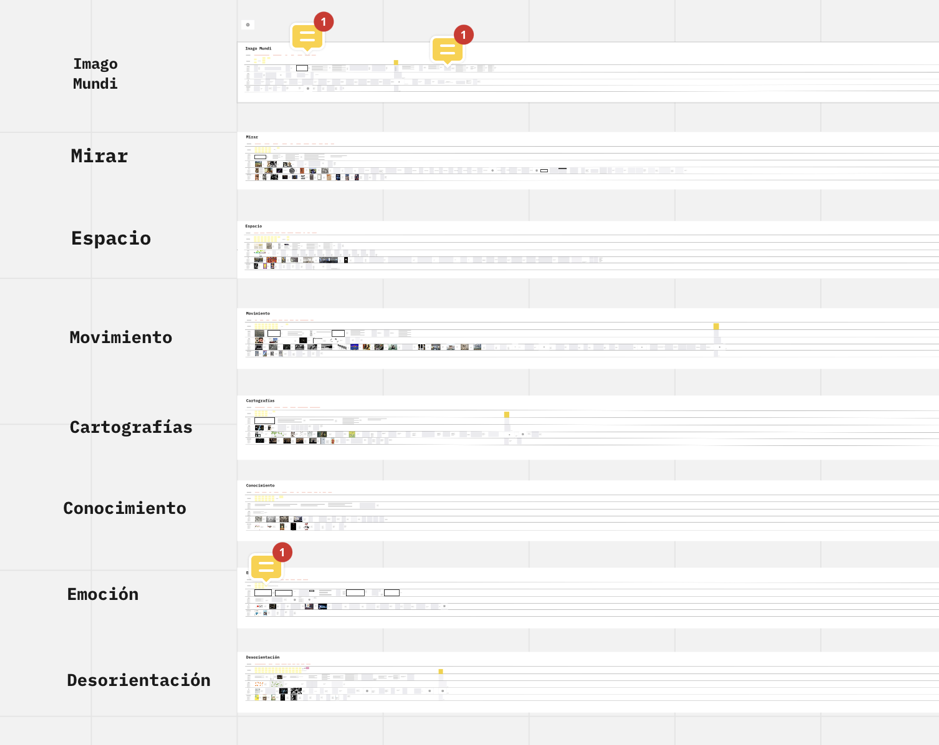
It is a great collection of knowledge and now our goal is to make sure we can find threads in this and make this information more accessible to people.
Personal Reflections
The project was very nice for me as a means of internal reflection. As a designer, I am quite interested in the social context of my work. This work helped me understand how different disciplines like Arts, humanities, sociology, and philosophy think about society. I think this will probably enrich my practise as a designer.
I have been a fan of Byung chul Han’s writings on topics like the sense of time (in the scent of time), the acts of wars (in disappearance of rituals), and the self-exploting individual (in the burnout society).
This read in the context of Bauman’s work on liquid modernity helped me develop some sense of understanding of the moving things in our societies.
Adding another layer of Mc Luhan’s Media Theory and Niel Postman’s techno criticisms, helped me reflect on things I observe in my everyday life. One such reflection, I wrote why we need to invent new religions that do not have the gods, but the same rituals and communities that religions provide. It can be read here : https://indiantinker.bearblog.dev/on-religious-constructs-their-need-and-interregnum/
I think an interesting way to explore and present these observations could be creating provocative pieces that help visitors reflect on what we observe around us and possibly this reflection can help generate insight.
So, the flow is as follows : Observation -> Reflection -> Reaction
I propose the following artefacts to be constructed in time. Since, mankind has always been creating problems and solving them over again or creating tools to solve them. This modality might be a good critical way to explore the ‘disorienting’ problems.
- Universal Decision Machine: A UDM is a device that helps people in times of information overload and choice paradox to make decisions. (Img 4)
- Protest Chair : I made a chair to protest the fact that it is so hard to buy a chair. (Img 5)
- Orientation GPT* : Orientation GPT is a GPT bot trained on the data on the Miro. People can ask it questions and it can reply in questions or answers.
- Time keeper* : Time keeper is a device that helps people keep a check on time. It is based on work of Byung chul han in the book - The scent of time.
- Self* : It is a mirror system that highlights the narcissism that popular mirrors like Selfie cameras generate and it tries to bring forward the broken perception we have towards the idea of self.
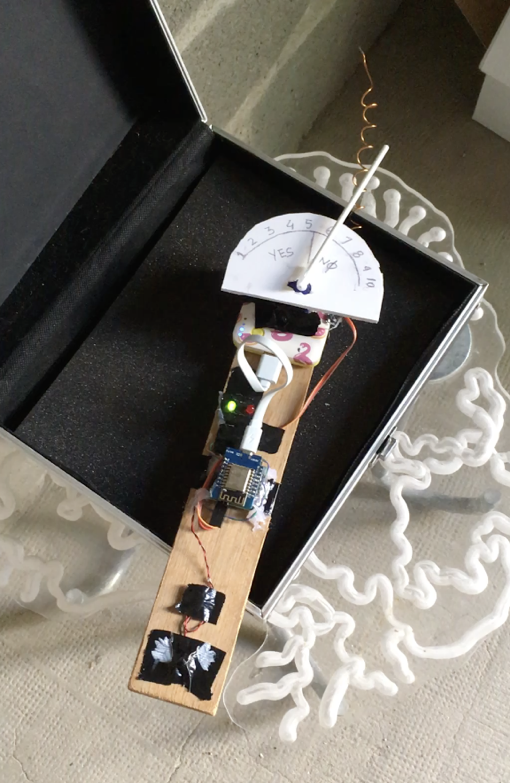
Img 4: Universal Decision Machine
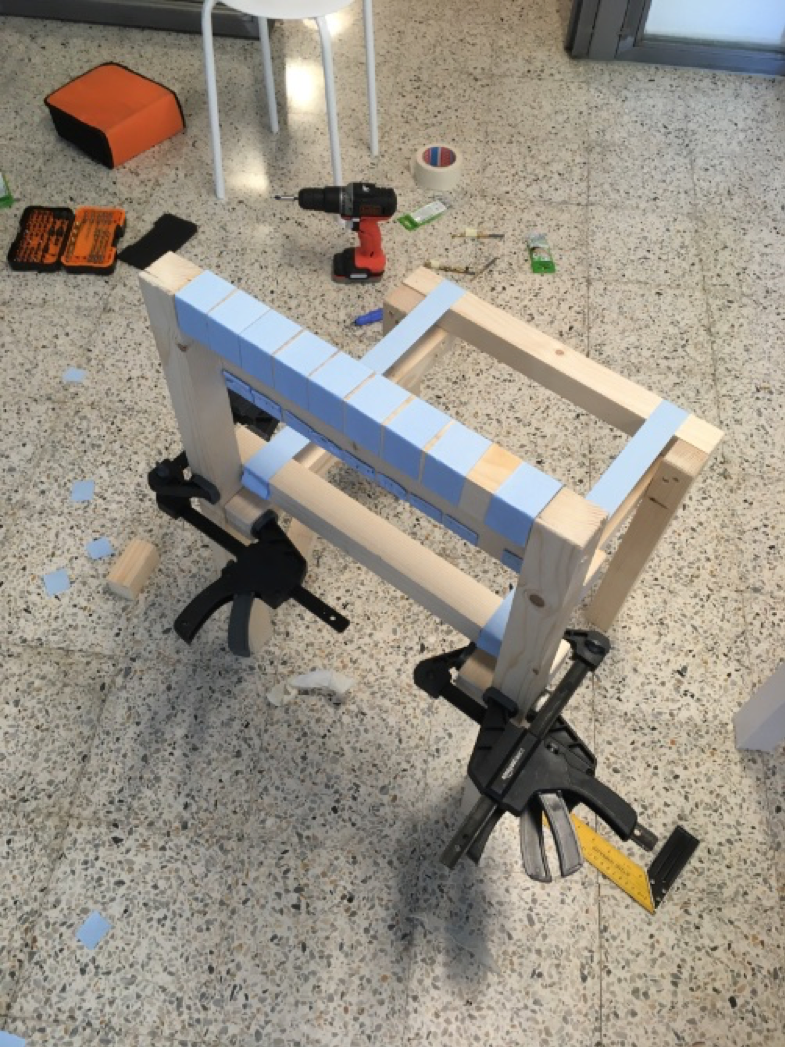
Img 5: Protest chair
-
- These are work in progress